文 / 陳家毅
《中国报·逍遥周末》,2006年7月28日
“戲劇盒”在今年新加坡藝術節,呈獻的《獨在家鄉為異客》最觸人心弦的不是層次多樣的電影投射,或悅耳卻略嫌重複的配樂,而是原作者柯思仁寫此文本的意念,與精煉有力的語言,以及編導郭慶亮真摯誠懇的態度。
文本劇情以越洋留學女生(是柯本人?)與留在國內行動不便的教授(是郭寶崑的投影?)兩人的通訊為主軸,帶出兩代人物對島國這些年來城市面貌社會變遷的感歎。寫在信件(電郵?)上的文字感性,在舞台上化作相距千里一來一回的雙獨白,很有散文式思緒漫遊的韻味,借而帶出年輕者的理想,和年長者過來人腳踏實地的反思,是新加坡舞台劇作上少見的嘗試。
自我薪傳不息
學生提出島國為了“商業前途”而速變,幾乎就將文化地圖易容得讓人難以辨認:向來人文紮根的“國家圖書館”與“文化中心”,也被連根拔起,更不論從前市區中心“同濟醫院”一帶的老房子了。
一老一少空中“對談”毫不見年齡的差異而有疏離,反而令人看見新加坡文化人自我薪傳不息的可能性。台下兩百多個觀眾黑暗中鴉雀無聲,實在也不無感歎。這么“不娛樂”又“嚴肅的課題”在時下講究流行消費的潮流,越發讓人省思。
詭異的是,演出的地點正是取代了消失掉的新“文化中心”;而這新所在,又正孕活在新“國家圖書館”的白色巨體內。劇中人站在新場地上“指責”,“投訴”舊文化地圖被大意(抑或是有意?)的抹去,觀眾坐在舒適的新設施裡,不免有種嘴巴被塞滿糖果,耳朵聽著當事人大吐苦水,到底要不要(會不會?)妥協,都充滿了令人不快的矛盾。
喚醒沉睡意識
宛若現實生活中難以別過頭去的自動選擇,得到“紅包”一般的蠅頭小利,許多便放鬆了對過去的執著。漸漸的,漸漸的,便自行自動自我遊說:改變沒關係,一切也安好,反正都會被照顧妥貼——某種聽話的逆來順受。
直到像柯與郭這樣子讓觀戲者坐在針氈般的經驗,喚醒了沉睡已久的潛意識。
從“文化中心”看戲時我游思開去,記起倫敦東北區依思林頓(Islington)的一家小劇院“Almeida”。此區百年來人才輩出,不少名作者名劇作家曾擇居這裡,小劇院多年來在一條原本不起眼的小橫街上守著自己的崗位,一齣又一齣的劇場認真地演下去,獲得掌聲獎賞無數,更吸引了無數著名的編導和演員,都來參與創作。新增建的劇場,不但鞏固了它在倫敦文化上的一席之地,因為它寄之與時,更平添了一段難得的歷史——這是“連根拔起”或“插栽”處理手法的最大不同點。
Note: 无意间发现这篇有关《独在家乡为异客》的文章,转载在此,以作记录。原文见陈家毅专栏《毅望城市》。

Showing posts with label 独在家乡为异客. Show all posts
Showing posts with label 独在家乡为异客. Show all posts
Wednesday, 15 November 2006

Tuesday, 13 June 2006
Lianhe Zaobao Review 13 June 2006
评《独在家乡为异客》
家乡异客 离去归来
《联合早报》 2006年6月13日
● 刘晓义(文)
八年前离乡我写过一句诗:“我的离去/是不是另一种归来”。年少离家却心系故土,在异乡亦有了自己的天地。肉体的分离未必不是精神回归。而坐在戏剧中心观众席,我见证了另一群似曾相识又截然相反的异乡人。
故事由李邪演的老师及许慧玲演的学生的对话展开,化自散文集《如果岛国,一个离人》中柯思仁和黄浩威师生通信形式。两人对话仿佛一场自溺的语言盛宴,对普通观众而言精致却也难以消化。加上错综情节,庞大主题和贪多的意象,戏并没很好完成直达观众内心的任务。反倒是陈子谦的影像和The Observatory的音乐为戏注入多元美感,与整个舞美共同构成诗意氛围。
值得一提的还有演出字幕,并没逐字逐句翻译,而采用第三人称角度简写舞台对话。导演用心良苦,是不想观众顾此失彼。可惜很多时候演员的行动没能很好代替语言。精彩字句出现时,简单的翻译无法给予观众原本的力度和美感。
学生如树老师如水
师生分别代表两种精神状态。学生离乡,对外面世界充满新奇,又念念不忘那个岛。老师想逃离,却受困生活种种,肉体捆绑轮椅上,精神早已飞翔。影像给了很好提示:学生宛如一棵树,风吹云动树依旧扎根;老师宛如海滩上的水焦躁不安,一次次奋力向前却无济于事。于是这焦躁不安的水开始在脑海里构造三个故事——
一个想要离开的女孩,所谓的“离开”其实是一种“回归”,因为本来就不是岛国人,只想回到生她养她的家,回到阿嫲身边。然而这回归对两个爱她的人来说,却是不能忍受的分离。两段感情牵制让女孩像一条等待死亡的鱼,在不能逃脱的空间里窒息。最终她回到阿嫲身边,不想阿嫲却千方百计赶走她,“走了不要再回头”。这时阿嫲和点香祭拜的老师多么相像,一辈子困在一个地方,离开的希望寄托在后辈身上。
一个刺客。刺客决定告别平淡无奇的生活,加入反清复明队伍,却在刺杀失败后英年早逝。对刺客来说,刺杀,是天下人的“回归”,回归明朝,回归属于汉人的时代,回归他们熟悉的生活。却是个人的“离开”,离开家乡,离开他安定的村子,甚至离开这个世界,“内脏都挖出来喂狗”。这样一个久远的故事,却用代表新加坡母性的闽南语讲述,让人感觉到一种切身的悲伤,甚至一种紧迫感。
一个收集骨头的人。千万年前动物或古人,尸骨常化成石头,成为历史见证。人的骨头除去了虚假、负累的肉体和灵魂,是铁的事实、记忆的见证、情感的依附。而建筑在骨头上面的坟墓或者神殿,不过是掩人耳目的“历史”和“事实”。于是当收集骨头的人被蟑螂蚕食干净之后,记忆也就随着骨头消散了。于是当老师说到,母亲下葬不到一年,政府就宣布15年后要尸骨掘起,不由让人为之感伤。
既是异客何谓家乡?
三个故事间师生不停交换对家乡的建筑、街道甚至树的记忆和情感。三个身着黑白色调服装的故事人或灵魂,仿佛老师或导演或剧作者脑中跳跃的符号,在师生间来回徘徊却无法离开。在岛上不停变幻和拆建中,其实我们和他们一样,记忆和情感面目全非。于是无论对于谁,女孩刺客或收集骨头的人,老师或学生,生长或寄居在这岛上的我们,到哪儿都不是回来,到哪儿都是离开,到哪儿都是异客。
既然是异客,又何谓家乡?
(作者为实践剧场驻团演员,本地青年剧作者)
家乡异客 离去归来
《联合早报》 2006年6月13日
● 刘晓义(文)
八年前离乡我写过一句诗:“我的离去/是不是另一种归来”。年少离家却心系故土,在异乡亦有了自己的天地。肉体的分离未必不是精神回归。而坐在戏剧中心观众席,我见证了另一群似曾相识又截然相反的异乡人。
故事由李邪演的老师及许慧玲演的学生的对话展开,化自散文集《如果岛国,一个离人》中柯思仁和黄浩威师生通信形式。两人对话仿佛一场自溺的语言盛宴,对普通观众而言精致却也难以消化。加上错综情节,庞大主题和贪多的意象,戏并没很好完成直达观众内心的任务。反倒是陈子谦的影像和The Observatory的音乐为戏注入多元美感,与整个舞美共同构成诗意氛围。
值得一提的还有演出字幕,并没逐字逐句翻译,而采用第三人称角度简写舞台对话。导演用心良苦,是不想观众顾此失彼。可惜很多时候演员的行动没能很好代替语言。精彩字句出现时,简单的翻译无法给予观众原本的力度和美感。
学生如树老师如水
师生分别代表两种精神状态。学生离乡,对外面世界充满新奇,又念念不忘那个岛。老师想逃离,却受困生活种种,肉体捆绑轮椅上,精神早已飞翔。影像给了很好提示:学生宛如一棵树,风吹云动树依旧扎根;老师宛如海滩上的水焦躁不安,一次次奋力向前却无济于事。于是这焦躁不安的水开始在脑海里构造三个故事——
一个想要离开的女孩,所谓的“离开”其实是一种“回归”,因为本来就不是岛国人,只想回到生她养她的家,回到阿嫲身边。然而这回归对两个爱她的人来说,却是不能忍受的分离。两段感情牵制让女孩像一条等待死亡的鱼,在不能逃脱的空间里窒息。最终她回到阿嫲身边,不想阿嫲却千方百计赶走她,“走了不要再回头”。这时阿嫲和点香祭拜的老师多么相像,一辈子困在一个地方,离开的希望寄托在后辈身上。
一个刺客。刺客决定告别平淡无奇的生活,加入反清复明队伍,却在刺杀失败后英年早逝。对刺客来说,刺杀,是天下人的“回归”,回归明朝,回归属于汉人的时代,回归他们熟悉的生活。却是个人的“离开”,离开家乡,离开他安定的村子,甚至离开这个世界,“内脏都挖出来喂狗”。这样一个久远的故事,却用代表新加坡母性的闽南语讲述,让人感觉到一种切身的悲伤,甚至一种紧迫感。
一个收集骨头的人。千万年前动物或古人,尸骨常化成石头,成为历史见证。人的骨头除去了虚假、负累的肉体和灵魂,是铁的事实、记忆的见证、情感的依附。而建筑在骨头上面的坟墓或者神殿,不过是掩人耳目的“历史”和“事实”。于是当收集骨头的人被蟑螂蚕食干净之后,记忆也就随着骨头消散了。于是当老师说到,母亲下葬不到一年,政府就宣布15年后要尸骨掘起,不由让人为之感伤。
既是异客何谓家乡?
三个故事间师生不停交换对家乡的建筑、街道甚至树的记忆和情感。三个身着黑白色调服装的故事人或灵魂,仿佛老师或导演或剧作者脑中跳跃的符号,在师生间来回徘徊却无法离开。在岛上不停变幻和拆建中,其实我们和他们一样,记忆和情感面目全非。于是无论对于谁,女孩刺客或收集骨头的人,老师或学生,生长或寄居在这岛上的我们,到哪儿都不是回来,到哪儿都是离开,到哪儿都是异客。
既然是异客,又何谓家乡?
(作者为实践剧场驻团演员,本地青年剧作者)
Monday, 12 June 2006
Today Review 12 June 2006
TODAY
12 June 06
HOME IS ALL ABOUT POETRY
THE latest play by Drama Box's acclaimed director Kok Heng Leun's, Stranger at Home, comes across as one very long poem about the idea of home, memories and wanderlust.
Based on acclaimed playwright Quah Sy Ren's works, such is the lyricism of the script that if you rely on the surtitles, you will lose the nuances and texture of the language.
The play explores a student's homesickness and eventual feeling of independence, as well as a teacher's lack of homesickness in the city.
Also included are vignettes furthering the idea of home and memories and how these can affect one's values.
Admittedly, the play could be tighter. Running at 100 minutes, it becomes repetitive in the last half-hour.
The story is accompanied by music by The Observatory and a film made by Royston Tan specifically for the production.
Given the poetic script, however, the film becomes a distraction as images flash on and off behind and in front of the characters onstage.
The music is a nice touch, the film not. After all, it's theatre that we have come to see.
12 June 06
HOME IS ALL ABOUT POETRY
THE latest play by Drama Box's acclaimed director Kok Heng Leun's, Stranger at Home, comes across as one very long poem about the idea of home, memories and wanderlust.
Based on acclaimed playwright Quah Sy Ren's works, such is the lyricism of the script that if you rely on the surtitles, you will lose the nuances and texture of the language.
The play explores a student's homesickness and eventual feeling of independence, as well as a teacher's lack of homesickness in the city.
Also included are vignettes furthering the idea of home and memories and how these can affect one's values.
Admittedly, the play could be tighter. Running at 100 minutes, it becomes repetitive in the last half-hour.
The story is accompanied by music by The Observatory and a film made by Royston Tan specifically for the production.
Given the poetic script, however, the film becomes a distraction as images flash on and off behind and in front of the characters onstage.
The music is a nice touch, the film not. After all, it's theatre that we have come to see.
Sunday, 11 June 2006
Response
QX 说:我看了《独在家乡》后,回家把两年前买的《如果岛国》拿出来看。QX 之前还说她看到哭了。
BJ 的 sms:影像效果新颖,舞台画面感很强,有国际水准喔!导演把剧本剪裁拼贴得好,真是个有文学气质的导演!当然作者精神内涵的深度也很重要哦!
HL 和 SB 说:看书就好了。
还有其他朋友说的有长有短,有喜欢有不喜欢的意见。有的觉得太过 indulgent, 有的觉得很能够认同,有的喜欢影像、音乐、文字等的结合,有的认为文字的部分太过 overwhelming.
这些都是认识的,而且比较熟的朋友说的意见。 and don't forget those comments in this blog. 我还看到 LXX 也来看戏。不过戏演到一半他就离席,不知道是上厕所还是回家了。后来我没有看到他回到剧院,也可能是上完厕所就坐在后面的位子。
我跟庆亮谈起,说看来观众的反应相当两极化。看看 ST 和 BT 的剧评,就可见一斑了。两份报纸评的好像是两部完全不同的戏。
没有人能够说别人的看法是不对。每一个人都有自己的经验和感受方式,也从中选择某一个感性或理性的参照点来对应演出。有的时候,刚好戏的某一个部分让你想起了某一个回忆的片段,触发了你的某一种感伤和认同。有的时候,可能是你采取了某一种直接或曲折的阅读方式而有了某一种体会和思考。你不会因为别人说好看你就也说好看,也不需要和别人激烈的辩论究竟是好看还是不好看。
剧场中的你,有没有发现,比起生活中的你,更有自主性?
BJ 的 sms:影像效果新颖,舞台画面感很强,有国际水准喔!导演把剧本剪裁拼贴得好,真是个有文学气质的导演!当然作者精神内涵的深度也很重要哦!
HL 和 SB 说:看书就好了。
还有其他朋友说的有长有短,有喜欢有不喜欢的意见。有的觉得太过 indulgent, 有的觉得很能够认同,有的喜欢影像、音乐、文字等的结合,有的认为文字的部分太过 overwhelming.
这些都是认识的,而且比较熟的朋友说的意见。 and don't forget those comments in this blog. 我还看到 LXX 也来看戏。不过戏演到一半他就离席,不知道是上厕所还是回家了。后来我没有看到他回到剧院,也可能是上完厕所就坐在后面的位子。
我跟庆亮谈起,说看来观众的反应相当两极化。看看 ST 和 BT 的剧评,就可见一斑了。两份报纸评的好像是两部完全不同的戏。
没有人能够说别人的看法是不对。每一个人都有自己的经验和感受方式,也从中选择某一个感性或理性的参照点来对应演出。有的时候,刚好戏的某一个部分让你想起了某一个回忆的片段,触发了你的某一种感伤和认同。有的时候,可能是你采取了某一种直接或曲折的阅读方式而有了某一种体会和思考。你不会因为别人说好看你就也说好看,也不需要和别人激烈的辩论究竟是好看还是不好看。
剧场中的你,有没有发现,比起生活中的你,更有自主性?
Business Times Review 10 June 2006
June 10, 2006
DRAMA BOX'S A STRANGER AT HOME
An aesthetic tableau fraught with tension
By CHEAH UI-HOON
FACED with an avantgarde play, it helps to have some - or rather, many - clues along the way. For Drama Box's A Stranger At Home, the first vital clue was the first English subtitle, 'A Mind Map', flanking the stage just before the play started.
Another prior clue - one much less oblique - was director Kok Heng Leun's preview of the play, as seen in media reports, that A Stranger At Home is a deconstruction of local academic Quah Sy Ren's works.
Which should have been a red flag, signalling that one should have a good idea of Quah's works before viewing the play, especially as it was almost like an ode to the writer. Which is fine and good if the novelist/ playwright concerned is someone whose works are as well-known as those of Oscar Wilde, but not when they aren't.
A Stranger At Home then - although quite an 'atmospheric' play, in which theatre, music and film were poetically woven together - appeared, at worst, an obscure stringing together of random stories with only a tenuous connection, and which didn't necessarily segue into or overlap one another at meaningful moments.
At best, Kok crafted an aesthetic tableau with five actors on the stage - replete with sounds and beautiful abstract images - which had an artful pensive mood to it, while also being fraught with tension from start to finish.
A Stranger At Home - which needs no little deconstructing itself - started with a student (Koh Hui Ling) bidding farewell to her wheelchair-bound professor (Li Xie) as she was leaving to study overseas. From there, they have correspondence, voiced by the actresses. As the student writes about her new discoveries and experiences, the professor in turn retreats often into her thoughts, imagination and memories.
The 'mind map' then refers to the oft random trails of thoughts and thought processes in the professor's mind - as the stories within the play segue in and out of a girl-girl-boy relationship, a Qing dynasty story of a rebel and a story of a bone collector.
Each story-within-the-story had a different 'personality' to it - whether it was the dramatic pathos of the triangular relationship (acted by Peter Sau, Yeo Yann Yann and Mindee Ong), the Qing tale told eloquently (by Mindee Ong) in hokkien dialect, or the graphic morbidity of grave exhumations, decaying corpses and cockroaches.
Local indie outfit The Observatory's music underpinned the mood on the stage, while film-maker Royston Tan's images provided a much-needed 'lively' counterpoint - think moving clouds, flickering flames, the ebb and flow of the sea, and leaking plastic bags containing live goldfish - to the monotonous, constrained movements on stage.
A Stranger At Home was unabashedly philosophical, with Kok's idea of a text-based play being emotive narrations of prose and poetry written by Quah in his works; rather than engaging dialogue. While the Mandarin lines could be appreciated for their poetry, the English summaries were just a little too brief.
Knowing and empathising with one of Kok's bugbears - how Singapore's old but iconic buildings are torn down and new ones rebuilt in their space - there were several poignant lines that resonate. As the student recounted all the buildings that are no longer around or have been moved, the professor states how this is equivalent to robbing her of her childhood. Our roots and sense of belonging, surely, are also linked to the physical space around us.
But in an island with finite and limited space, change seems to be the only constant that is accepted without question.
In the end though, the Qing dynasty rebel leads a failed rebellion. Which one could read as a pessimistic or fatalistic stance that individuals can do little to either effect change or stand in its way when it becomes a fact of life.
DRAMA BOX'S A STRANGER AT HOME
An aesthetic tableau fraught with tension
By CHEAH UI-HOON
FACED with an avantgarde play, it helps to have some - or rather, many - clues along the way. For Drama Box's A Stranger At Home, the first vital clue was the first English subtitle, 'A Mind Map', flanking the stage just before the play started.
Another prior clue - one much less oblique - was director Kok Heng Leun's preview of the play, as seen in media reports, that A Stranger At Home is a deconstruction of local academic Quah Sy Ren's works.
Which should have been a red flag, signalling that one should have a good idea of Quah's works before viewing the play, especially as it was almost like an ode to the writer. Which is fine and good if the novelist/ playwright concerned is someone whose works are as well-known as those of Oscar Wilde, but not when they aren't.
A Stranger At Home then - although quite an 'atmospheric' play, in which theatre, music and film were poetically woven together - appeared, at worst, an obscure stringing together of random stories with only a tenuous connection, and which didn't necessarily segue into or overlap one another at meaningful moments.
At best, Kok crafted an aesthetic tableau with five actors on the stage - replete with sounds and beautiful abstract images - which had an artful pensive mood to it, while also being fraught with tension from start to finish.
A Stranger At Home - which needs no little deconstructing itself - started with a student (Koh Hui Ling) bidding farewell to her wheelchair-bound professor (Li Xie) as she was leaving to study overseas. From there, they have correspondence, voiced by the actresses. As the student writes about her new discoveries and experiences, the professor in turn retreats often into her thoughts, imagination and memories.
The 'mind map' then refers to the oft random trails of thoughts and thought processes in the professor's mind - as the stories within the play segue in and out of a girl-girl-boy relationship, a Qing dynasty story of a rebel and a story of a bone collector.
Each story-within-the-story had a different 'personality' to it - whether it was the dramatic pathos of the triangular relationship (acted by Peter Sau, Yeo Yann Yann and Mindee Ong), the Qing tale told eloquently (by Mindee Ong) in hokkien dialect, or the graphic morbidity of grave exhumations, decaying corpses and cockroaches.
Local indie outfit The Observatory's music underpinned the mood on the stage, while film-maker Royston Tan's images provided a much-needed 'lively' counterpoint - think moving clouds, flickering flames, the ebb and flow of the sea, and leaking plastic bags containing live goldfish - to the monotonous, constrained movements on stage.
A Stranger At Home was unabashedly philosophical, with Kok's idea of a text-based play being emotive narrations of prose and poetry written by Quah in his works; rather than engaging dialogue. While the Mandarin lines could be appreciated for their poetry, the English summaries were just a little too brief.
Knowing and empathising with one of Kok's bugbears - how Singapore's old but iconic buildings are torn down and new ones rebuilt in their space - there were several poignant lines that resonate. As the student recounted all the buildings that are no longer around or have been moved, the professor states how this is equivalent to robbing her of her childhood. Our roots and sense of belonging, surely, are also linked to the physical space around us.
But in an island with finite and limited space, change seems to be the only constant that is accepted without question.
In the end though, the Qing dynasty rebel leads a failed rebellion. Which one could read as a pessimistic or fatalistic stance that individuals can do little to either effect change or stand in its way when it becomes a fact of life.
Saturday, 10 June 2006
Straits Times Review 10 June 2006
June 10, 2006
Tender was the night
Drama Box's A Stranger At Home evokes the realisation that things fall apart but hope persists
By Hong Xinyi, Arts Reporter

A Stranger At Home begins with a student bidding goodbye to her wheelchair-bound professor to study in New York. -- DESMOND FOO
THEATRE A STRANGER AT HOME
Drama Box Drama Centre Thursday
THIS Mandarin play is extraordinary in several ways, but its greatest achievement lies in its sustained evocation of a profoundly tender mood.
The production has a self-possessed reticence, a quietly intractable certainty about its artistic purpose.
The story begins with a journey: A student (Koh Hui Ling) says goodbye to her wheelchair-bound professor (Li Xie), leaving her unnamed island nation to study in New York.
Their correspondence - the professor mourns the island's lost histories, the student is entranced by new worlds - structures much of the play.
Other stories emerge, echoing the central theme of journeying. A girl (Yeo Yann Yann) returns to her rural hometown after wearying of life in the city, only to realise that some journeys, once undertaken, cannot be retracted.
Actress Mindee Ong narrates in poetic Hokkien the story of a young man from the Qing dynasty who is inspired by rhetoric to create a revolution but discovers that translating ideals into reality can be a messy business.
The interweaving stories in the play don't unfold as much as they bloom, softly and surely, with a bitter-sweet inevitability, like the gentle intimations of impending rain in an austere grey sky.
The cogency of its vision is all the more remarkable considering the many elements contained in the production.
Director Kok Heng Leun pieced together the text of the play by using excerpts from various plays and essays written by home-grown playwrights Quah Sy Ren and Ng How Wee.
The haunting music for the piece was provided by experimental rock band The Observatory, and film-maker Royston Tan conceptualised and shot the film images that accompany the cast on stage.
Projected onto a screen of gossamer - translucence placed in front of the actors, Tan's images weaved their own visual haiku of lonely nostalgia - goldfish glitter in a leaking plastic bag; old records spin in woeful revolutions; bare branches ache towards stark, clear skies.
Most of the time, the actors, music and images worked together seamlessly. There were moments, however, when all the things going on felt a tad distracting, especially when the screen kept being lowered and raised for different scenes.
The English surtitles were also more of a general summary rather than a proper translation of the intricate Mandarin script.
But one barely registers these imperfections. Moments of wonder surface so suddenly and vividly, they seem to leave luminous imprints tenderly on your soul.
In one scene, the student describes how, towards the ragged end of autumn in New York, she goes on a ferry ride to visit the Statue of Liberty. As the ferry heads back to Manhattan, the city's graceful skyscrapers soar before her in a resplendent panorama.
Later, in a lyrical counterpoint to Manhattan's iconic skyline, the student recites a list of all the places one can no longer find in Singapore - the old National Library, Satay Club, Van Cleef Aquarium, the National Theatre and the old Drama Centre at Fort Canning Hill.
Each name she calls is like an elegiac chime, marking a remembrance of things lost and never mourned. The lights are turned onto the audience, sitting in the new Drama Centre - the moment is both a question (do you remember?) and a prophecy (this, too, shall pass).
Kok structured this play in five sections, each named after a section of T.S. Eliot's 1922 poem, The Wasteland. It is not difficult to see why: With its pastiche of texts striving to articulate a sense of alienation, this play has a distinct affinity with Eliot's modernist epic.
But at heart, this play is a fundamentally different creature. Eliot ends The Wasteland with a despairing cry: 'These fragments I have shored against my ruin.'
A Stranger At Home, however, leaves you with an ache for something you never properly realised you missed. It relinquishes bleak despair for something far more potent - the realisation that things always fall apart, but hope foolishly persists.
A Stranger At Home plays at the Drama Centre today at 8pm. Tickets from $15 to $50 available from Sistic (tel: 6348-5555).
hxinyi@sph.com.sg
'It leaves you with an ache for something you never properly realised you missed.'
Tender was the night
Drama Box's A Stranger At Home evokes the realisation that things fall apart but hope persists
By Hong Xinyi, Arts Reporter
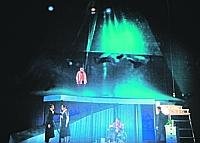
A Stranger At Home begins with a student bidding goodbye to her wheelchair-bound professor to study in New York. -- DESMOND FOO
THEATRE A STRANGER AT HOME
Drama Box Drama Centre Thursday
THIS Mandarin play is extraordinary in several ways, but its greatest achievement lies in its sustained evocation of a profoundly tender mood.
The production has a self-possessed reticence, a quietly intractable certainty about its artistic purpose.
The story begins with a journey: A student (Koh Hui Ling) says goodbye to her wheelchair-bound professor (Li Xie), leaving her unnamed island nation to study in New York.
Their correspondence - the professor mourns the island's lost histories, the student is entranced by new worlds - structures much of the play.
Other stories emerge, echoing the central theme of journeying. A girl (Yeo Yann Yann) returns to her rural hometown after wearying of life in the city, only to realise that some journeys, once undertaken, cannot be retracted.
Actress Mindee Ong narrates in poetic Hokkien the story of a young man from the Qing dynasty who is inspired by rhetoric to create a revolution but discovers that translating ideals into reality can be a messy business.
The interweaving stories in the play don't unfold as much as they bloom, softly and surely, with a bitter-sweet inevitability, like the gentle intimations of impending rain in an austere grey sky.
The cogency of its vision is all the more remarkable considering the many elements contained in the production.
Director Kok Heng Leun pieced together the text of the play by using excerpts from various plays and essays written by home-grown playwrights Quah Sy Ren and Ng How Wee.
The haunting music for the piece was provided by experimental rock band The Observatory, and film-maker Royston Tan conceptualised and shot the film images that accompany the cast on stage.
Projected onto a screen of gossamer - translucence placed in front of the actors, Tan's images weaved their own visual haiku of lonely nostalgia - goldfish glitter in a leaking plastic bag; old records spin in woeful revolutions; bare branches ache towards stark, clear skies.
Most of the time, the actors, music and images worked together seamlessly. There were moments, however, when all the things going on felt a tad distracting, especially when the screen kept being lowered and raised for different scenes.
The English surtitles were also more of a general summary rather than a proper translation of the intricate Mandarin script.
But one barely registers these imperfections. Moments of wonder surface so suddenly and vividly, they seem to leave luminous imprints tenderly on your soul.
In one scene, the student describes how, towards the ragged end of autumn in New York, she goes on a ferry ride to visit the Statue of Liberty. As the ferry heads back to Manhattan, the city's graceful skyscrapers soar before her in a resplendent panorama.
Later, in a lyrical counterpoint to Manhattan's iconic skyline, the student recites a list of all the places one can no longer find in Singapore - the old National Library, Satay Club, Van Cleef Aquarium, the National Theatre and the old Drama Centre at Fort Canning Hill.
Each name she calls is like an elegiac chime, marking a remembrance of things lost and never mourned. The lights are turned onto the audience, sitting in the new Drama Centre - the moment is both a question (do you remember?) and a prophecy (this, too, shall pass).
Kok structured this play in five sections, each named after a section of T.S. Eliot's 1922 poem, The Wasteland. It is not difficult to see why: With its pastiche of texts striving to articulate a sense of alienation, this play has a distinct affinity with Eliot's modernist epic.
But at heart, this play is a fundamentally different creature. Eliot ends The Wasteland with a despairing cry: 'These fragments I have shored against my ruin.'
A Stranger At Home, however, leaves you with an ache for something you never properly realised you missed. It relinquishes bleak despair for something far more potent - the realisation that things always fall apart, but hope foolishly persists.
A Stranger At Home plays at the Drama Centre today at 8pm. Tickets from $15 to $50 available from Sistic (tel: 6348-5555).
hxinyi@sph.com.sg
'It leaves you with an ache for something you never properly realised you missed.'
Friday, 9 June 2006
Man with Dino
this is the great man behind A Stranger at Home. the photo is taken from the programme booklet. cute, isn't he? especially with dino in his arms. he is the adopted-father of my two kids... hehe...

for ref, read the article in either 《刺客·乩童·按摩女郎》 or 《戏剧盒 1992-2002》. both are on sale during the performance.


for ref, read the article in either 《刺客·乩童·按摩女郎》 or 《戏剧盒 1992-2002》. both are on sale during the performance.
Intelligent Audience
刚刚看了《独在家乡为异客》的首演。我并不准备谈我的观感,毕竟我是这个演出的部分作者,而现在还不是让“死去的作者”复活的时候。
看戏之前,我对自己说,如果好看的话,我明晚会再去看一次。现在我已经决定再去看了。
我想看的,倒不是自己的文本,that's too indulgent, although i don't deny that i sometimes could be very indulgent. hehe. what i want to watch again are the other elements created by heng luen, royston, the obvervatory, and all other designers. 整个组合相当迷人,而且有很多层次。我看了一次,觉得还有许多地方是应该看多几次,反复体会玩味的。
有一件非常值得记录的事,就是演出后的观众和导演的对话中,观众的问题绝大多数非常 intelligent, which really surprises me! they are very open-minded, and they don't ask questions like: why do you do this, why do you do that... 观众非常年轻。非常年轻。可能是这个原因吗?他们没有 pre-conception, 也没有包袱,而且愿意尝试 the pleasure of reading. 对一个作者来说,看到这样的观众,真是开心!
看戏之前,我对自己说,如果好看的话,我明晚会再去看一次。现在我已经决定再去看了。
我想看的,倒不是自己的文本,that's too indulgent, although i don't deny that i sometimes could be very indulgent. hehe. what i want to watch again are the other elements created by heng luen, royston, the obvervatory, and all other designers. 整个组合相当迷人,而且有很多层次。我看了一次,觉得还有许多地方是应该看多几次,反复体会玩味的。
有一件非常值得记录的事,就是演出后的观众和导演的对话中,观众的问题绝大多数非常 intelligent, which really surprises me! they are very open-minded, and they don't ask questions like: why do you do this, why do you do that... 观众非常年轻。非常年轻。可能是这个原因吗?他们没有 pre-conception, 也没有包袱,而且愿意尝试 the pleasure of reading. 对一个作者来说,看到这样的观众,真是开心!
Thursday, 8 June 2006
Coming soon...
明天就是《独在家乡为异客》的首演了!到现在为止,我都还没有看过一次彩排。我写完剧本之后,通常都不想再去理会它。导演是一个独立的创作者,他应该把剧本的作者当作已经死了。明天晚上,当我出席首演的时候,我会以一个普通观众的身份去看戏。
很期待,很期待。当然也很想知道,其他观众看了之后有什么想法。如果你们看了戏,愿意和我分享想法的话,就在这里留言,或者寄 email 给我吧。
很期待,很期待。当然也很想知道,其他观众看了之后有什么想法。如果你们看了戏,愿意和我分享想法的话,就在这里留言,或者寄 email 给我吧。
Saturday, 3 June 2006
Sharing
《如果岛国,一个离人》在2004年中刚出版的时候,我和浩威做了几场分享会。如果我的记忆没有错的话,我们曾经在SUNTEC 的书展发布会、Kinokuniya、南初、国大,还“出国”到新山的宽柔中学呢。这些年我并不是很喜欢曝光,可能是更珍惜隐私,或者说珍惜属于自我的空间和时间吧。不过,分享会和观众交流倒是很过瘾,很有满足感的。
距离《如果岛国》的出版,很快的竟然已经两年了。明天又要做分享,是在 Library @ Esplanade ,为了配合《独在家乡为异客》的演出。我是相当害怕重复自己的,所以每一次的分享会都会想要找一个新的叙述的方式。这次也许我会讲要怎样阅读,而不是告诉观众我在书中写了一些什么。书的内容,他们可以自己去看啊。
也许我应该说一说《如果岛国》和《独在家乡》的关系。也许,我不只要说,也应该写成一篇散文。我已经好久好久没有写作了,不论是散文还是剧本。应该是时候重新开始书写自己了。
距离《如果岛国》的出版,很快的竟然已经两年了。明天又要做分享,是在 Library @ Esplanade ,为了配合《独在家乡为异客》的演出。我是相当害怕重复自己的,所以每一次的分享会都会想要找一个新的叙述的方式。这次也许我会讲要怎样阅读,而不是告诉观众我在书中写了一些什么。书的内容,他们可以自己去看啊。
也许我应该说一说《如果岛国》和《独在家乡》的关系。也许,我不只要说,也应该写成一篇散文。我已经好久好久没有写作了,不论是散文还是剧本。应该是时候重新开始书写自己了。
Tuesday, 30 May 2006
Library @ Esplanade
For those who are interested to find out more about A STRANGER AT HOME and the books that inspired it, join director Kok Heng Leun and Playwrights Quah Sy Ren and Ng How Wee at:
Library @ Esplanade
Sat, 3 June 06
2pm - 3pm
Free Admission!
*Conducted in Mandarin.
About the Play
Singapore Arts Festival 2006 presents
A STRANGER AT HOME
by Drama Box (World Premier)
A professor and his student embark on the study of life through e-mail exchanges. What does the heart want and where is itlocated? Will home be found there? Meet life’s characters – the teacher, the lover, the old woman, the medium and the terrorist who lay bare their hearts even as they search for it. Each is at the crossroads of choice: to claim a new sense of belonging or be
lost to nostalgia. A STRANGER AT HOME is a visceral look at the impact of the changing urbanlandscape on human emotions, needs, memories and existence.
Adapted and directed by Kok Heng Leun, based on the original play of the same title by Quah Sy Ren and his book “If on an Island, a Wanderer” co-written with Ng How Wee, presented with film by Royston Tan and music by local band, The Observatory in a combination of theatre, music, film and words.
Starring: Li Xie (Young Artist Award recipient, 2005), Peter Sau, Koh Hui Ling, Mindee Ong and Yeo Yann Yann
Performance Date: 8 to 10 June 2006
Time: 8pm
Venue: Drama Centre Theatre @ National Library
(Tickets are available at all SISTIC outlets, tel: 6348 5555)
Find out more about A STRANGER AT HOME: www.singaporeartsfest.com
Library @ Esplanade
Sat, 3 June 06
2pm - 3pm
Free Admission!
*Conducted in Mandarin.
About the Play
Singapore Arts Festival 2006 presents
A STRANGER AT HOME
by Drama Box (World Premier)
A professor and his student embark on the study of life through e-mail exchanges. What does the heart want and where is itlocated? Will home be found there? Meet life’s characters – the teacher, the lover, the old woman, the medium and the terrorist who lay bare their hearts even as they search for it. Each is at the crossroads of choice: to claim a new sense of belonging or be
lost to nostalgia. A STRANGER AT HOME is a visceral look at the impact of the changing urbanlandscape on human emotions, needs, memories and existence.
Adapted and directed by Kok Heng Leun, based on the original play of the same title by Quah Sy Ren and his book “If on an Island, a Wanderer” co-written with Ng How Wee, presented with film by Royston Tan and music by local band, The Observatory in a combination of theatre, music, film and words.
Starring: Li Xie (Young Artist Award recipient, 2005), Peter Sau, Koh Hui Ling, Mindee Ong and Yeo Yann Yann
Performance Date: 8 to 10 June 2006
Time: 8pm
Venue: Drama Centre Theatre @ National Library
(Tickets are available at all SISTIC outlets, tel: 6348 5555)
Find out more about A STRANGER AT HOME: www.singaporeartsfest.com
Stranger and Wanderer
没有想到相隔八年的两个作品,在主题上是那么接近。1996年,剑桥的一个下雪前夕的冬夜,写下了《独在家乡为异客》,很吊诡的,心情是平静多过激动。也许是因为一种完全抽离的处境吧,远在剑桥而写岛国。可是,和浩威电邮往返写《如果岛国,一个离人》的时候,2004年,却是完全陷身在这个让人无法自拔之地,已经四年了。
现在,看庆亮将这两个作品,合而为一,不知道他的心情是怎样的。再过两个星期,戏上演了,观众看了,其中又有多少异客与离人呢?
现在,看庆亮将这两个作品,合而为一,不知道他的心情是怎样的。再过两个星期,戏上演了,观众看了,其中又有多少异客与离人呢?
Monday, 29 May 2006
Lianhe Zaobao 2006-05-25
戏剧盒重组柯思仁的戏剧人物
构架对岛国的牵挂疏离

2006-05-25
● 周文龙
今年艺术节中,由本地剧团戏剧盒呈献,郭庆亮导演的华语舞台剧《独在家乡为异客》,集合柯思仁、黄浩威、陈子谦、Observatory乐团等本地创作精英,道出国人对岛国又爱又恨,欲走还留的复杂情感。
故事先从本地戏剧学者及剧作者柯思仁10年前写的同名剧本开始。
当时远在英国剑桥大学修读博士学位的柯思仁,写了这个剧本,要求戏剧盒艺术总监郭庆亮导演,后来却因为各种状况而计划耽搁了。
前年,柯思仁与黄浩威出版了散文集《如果岛国,一个旅人》,郭庆亮读了之后感触很深。他说:“我感受到他们在书里表达的疏离感,特别是对岛国的牵挂和不舍,却又时常有离开岛国的冲动。”
集中柯思仁剧本中人物
于是,郭庆亮开始翻回柯思仁过去的戏剧作品,如《刺客·乩童·按摩女郎》和《骨骨》等,发现这种新加坡人的吊诡状态,贯穿于所有剧本中,每个人物似乎都在寻找依附和继续漂泊之间,驻留和游走之间,寻找自己的记忆、身份及乡愁。
“那时,我就想到何不将思仁所有故事的角色重新切割组装,结合成一个新戏,这将是很有趣的尝试。”
《独在家乡为异客》故事从一个教授说起,他和他的学生开始电邮往来,谈起这个城市所难以抑止的落寞感,在交流中,故事深入至教授的内心世界,叙述他脑里筑构的一个个流离失所的虚构人物:老人、乩童、恐怖分子、情人和按摩女郎等。
表现作者的创作意识
郭庆亮说:“我像是把教授的脑剖开,从高处俯览他一个个格子般的感情空间,看他的思考脉络。”
这并不是郭庆亮第一次把作者的作品整合起来呈献。他改编导演过的舞台剧《快乐》,也是把英国作家王尔德的不同作品改编组合成一个戏。郭庆亮认为,这种以作者为中心的作品结合方式,更容易集中表现作者的创作意识,“像王尔德强调人的内在情感自由,思仁则关切环境和心灵的关系。”
与柯思仁亦友亦徒的本地作者黄浩威也有同感。他说:“每个创作者都有自己关心的事物和想说的话,这些主题会反复地在作者的不同剧本中出现。因此,把作者的舞台作品,特别是里头的人物组合起来,看他们如何擦出火花,是一件自然的事。”
对自称为“不负责任的父亲”的原著作者柯思仁来说,他欢迎导演任何作品上的诠释和改编。他说:“当庆亮提起要把我的戏剧作品结合起来时,我还笑说:哇,你要帮我做我的作品回顾展。”
柯思仁觉得,把剧本放在一起,像是解开连自己本身也未曾了解的谜语,对作品有更多视角和解读空间。
《独在家乡为异客》的音乐由本地著名乐团Obsrvatory创作,演员是2005年青年艺术家奖得主李邪,还有苏佳亮、许慧铃、杨雁雁及王欣。
陈子谦把电影融入舞台剧
除了柯思仁和黄浩威外,《独在家乡为异客》的另一亮点,便是本地电影导演陈子谦,他将制作电影短片,将电影和舞台剧结合起来。
陈子谦说,他的结合并非单纯呈献自己的电影短片,而是把电影融合入舞台剧里,成为舞台剧中不可或缺的重要元素。
他说:“舞台上会有两组影像,分前台和背景,而演员则在这两组影像里头穿梭表演。这几个不同空间的人物和影像的互动,将产生不同的视角画面和效果。”陈子谦形容这为“戏剧中的戏剧,影像中的影像”。
陈子谦的影像内容主要是怀旧物品如60年代的邮票、唱盘、钞票等,但他表示,他使用HD摄影机,令影像充满流动性,影像最后呈献的效果将让观众“大吃一惊”,认不出原来所拍摄的物品模样。
值得一提的是,今年陈子谦本来应该到法国康城出席他的电影“0430”的放映会,但为了完成《独在家乡为异客》的拍摄工作,他放弃了去康城的机会。
“这是我第一次参与舞台剧,而且对我而言,这出戏表达的东西很重要。至于康城,无所谓,下次我还可以再拍一部好片送到那里参展。”他笑说。
构架对岛国的牵挂疏离

2006-05-25
● 周文龙
今年艺术节中,由本地剧团戏剧盒呈献,郭庆亮导演的华语舞台剧《独在家乡为异客》,集合柯思仁、黄浩威、陈子谦、Observatory乐团等本地创作精英,道出国人对岛国又爱又恨,欲走还留的复杂情感。
故事先从本地戏剧学者及剧作者柯思仁10年前写的同名剧本开始。
当时远在英国剑桥大学修读博士学位的柯思仁,写了这个剧本,要求戏剧盒艺术总监郭庆亮导演,后来却因为各种状况而计划耽搁了。
前年,柯思仁与黄浩威出版了散文集《如果岛国,一个旅人》,郭庆亮读了之后感触很深。他说:“我感受到他们在书里表达的疏离感,特别是对岛国的牵挂和不舍,却又时常有离开岛国的冲动。”
集中柯思仁剧本中人物
于是,郭庆亮开始翻回柯思仁过去的戏剧作品,如《刺客·乩童·按摩女郎》和《骨骨》等,发现这种新加坡人的吊诡状态,贯穿于所有剧本中,每个人物似乎都在寻找依附和继续漂泊之间,驻留和游走之间,寻找自己的记忆、身份及乡愁。
“那时,我就想到何不将思仁所有故事的角色重新切割组装,结合成一个新戏,这将是很有趣的尝试。”
《独在家乡为异客》故事从一个教授说起,他和他的学生开始电邮往来,谈起这个城市所难以抑止的落寞感,在交流中,故事深入至教授的内心世界,叙述他脑里筑构的一个个流离失所的虚构人物:老人、乩童、恐怖分子、情人和按摩女郎等。
表现作者的创作意识
郭庆亮说:“我像是把教授的脑剖开,从高处俯览他一个个格子般的感情空间,看他的思考脉络。”
这并不是郭庆亮第一次把作者的作品整合起来呈献。他改编导演过的舞台剧《快乐》,也是把英国作家王尔德的不同作品改编组合成一个戏。郭庆亮认为,这种以作者为中心的作品结合方式,更容易集中表现作者的创作意识,“像王尔德强调人的内在情感自由,思仁则关切环境和心灵的关系。”
与柯思仁亦友亦徒的本地作者黄浩威也有同感。他说:“每个创作者都有自己关心的事物和想说的话,这些主题会反复地在作者的不同剧本中出现。因此,把作者的舞台作品,特别是里头的人物组合起来,看他们如何擦出火花,是一件自然的事。”
对自称为“不负责任的父亲”的原著作者柯思仁来说,他欢迎导演任何作品上的诠释和改编。他说:“当庆亮提起要把我的戏剧作品结合起来时,我还笑说:哇,你要帮我做我的作品回顾展。”
柯思仁觉得,把剧本放在一起,像是解开连自己本身也未曾了解的谜语,对作品有更多视角和解读空间。
《独在家乡为异客》的音乐由本地著名乐团Obsrvatory创作,演员是2005年青年艺术家奖得主李邪,还有苏佳亮、许慧铃、杨雁雁及王欣。
陈子谦把电影融入舞台剧
除了柯思仁和黄浩威外,《独在家乡为异客》的另一亮点,便是本地电影导演陈子谦,他将制作电影短片,将电影和舞台剧结合起来。
陈子谦说,他的结合并非单纯呈献自己的电影短片,而是把电影融合入舞台剧里,成为舞台剧中不可或缺的重要元素。
他说:“舞台上会有两组影像,分前台和背景,而演员则在这两组影像里头穿梭表演。这几个不同空间的人物和影像的互动,将产生不同的视角画面和效果。”陈子谦形容这为“戏剧中的戏剧,影像中的影像”。
陈子谦的影像内容主要是怀旧物品如60年代的邮票、唱盘、钞票等,但他表示,他使用HD摄影机,令影像充满流动性,影像最后呈献的效果将让观众“大吃一惊”,认不出原来所拍摄的物品模样。
值得一提的是,今年陈子谦本来应该到法国康城出席他的电影“0430”的放映会,但为了完成《独在家乡为异客》的拍摄工作,他放弃了去康城的机会。
“这是我第一次参与舞台剧,而且对我而言,这出戏表达的东西很重要。至于康城,无所谓,下次我还可以再拍一部好片送到那里参展。”他笑说。
A Stranger at Home
独在家乡为异客 (世界首演)
戏剧盒创作
http://dramabox.org/
“你要死在哪里?”
“某人的怀抱里。”
教授和他的学生通过电邮探问一个人的心属何处;家是心的栖息之处吗?
生命里不同的角色-老师,老人,情人,乩童,恐怖分子,在寻觅安心之处的过程,敞开着心扉。
漂浮的心应寻找依附,还是迷失于怀旧的情怀?
一出结合剧场、音乐、电影与文字等因素的舞台剧,让您倾听心的絮语、感叹生命的无常,探讨城市现代人的乡愁、记忆、身份等……
由青年艺术家奖得主(2000)郭庆亮改编、执导。
电影由著名导演陈子谦执导、制作。
音乐由本地著名团体The Observatory 创作。
改编自柯思仁同名剧作和柯思仁、黄浩威合著的散文集《如果岛国,一个离人》。
导演郭庆亮将在6月8日演出后,与观众交流。
青年艺术家奖得主 (2005) 李邪、苏佳亮、许慧铃、杨雁雁、王欣联手演出。
演出日期: 2006年6月8日至10日
时间: 晚上8点
地点:戏剧中心剧院
票价: $50, $40, $30, $15 (票价不包括$2 SISTIC行政费)
戏剧盒创作
http://dramabox.org/
“你要死在哪里?”
“某人的怀抱里。”
教授和他的学生通过电邮探问一个人的心属何处;家是心的栖息之处吗?
生命里不同的角色-老师,老人,情人,乩童,恐怖分子,在寻觅安心之处的过程,敞开着心扉。
漂浮的心应寻找依附,还是迷失于怀旧的情怀?
一出结合剧场、音乐、电影与文字等因素的舞台剧,让您倾听心的絮语、感叹生命的无常,探讨城市现代人的乡愁、记忆、身份等……
由青年艺术家奖得主(2000)郭庆亮改编、执导。
电影由著名导演陈子谦执导、制作。
音乐由本地著名团体The Observatory 创作。
改编自柯思仁同名剧作和柯思仁、黄浩威合著的散文集《如果岛国,一个离人》。
导演郭庆亮将在6月8日演出后,与观众交流。
青年艺术家奖得主 (2005) 李邪、苏佳亮、许慧铃、杨雁雁、王欣联手演出。
演出日期: 2006年6月8日至10日
时间: 晚上8点
地点:戏剧中心剧院
票价: $50, $40, $30, $15 (票价不包括$2 SISTIC行政费)
Subscribe to:
Posts (Atom)